The question
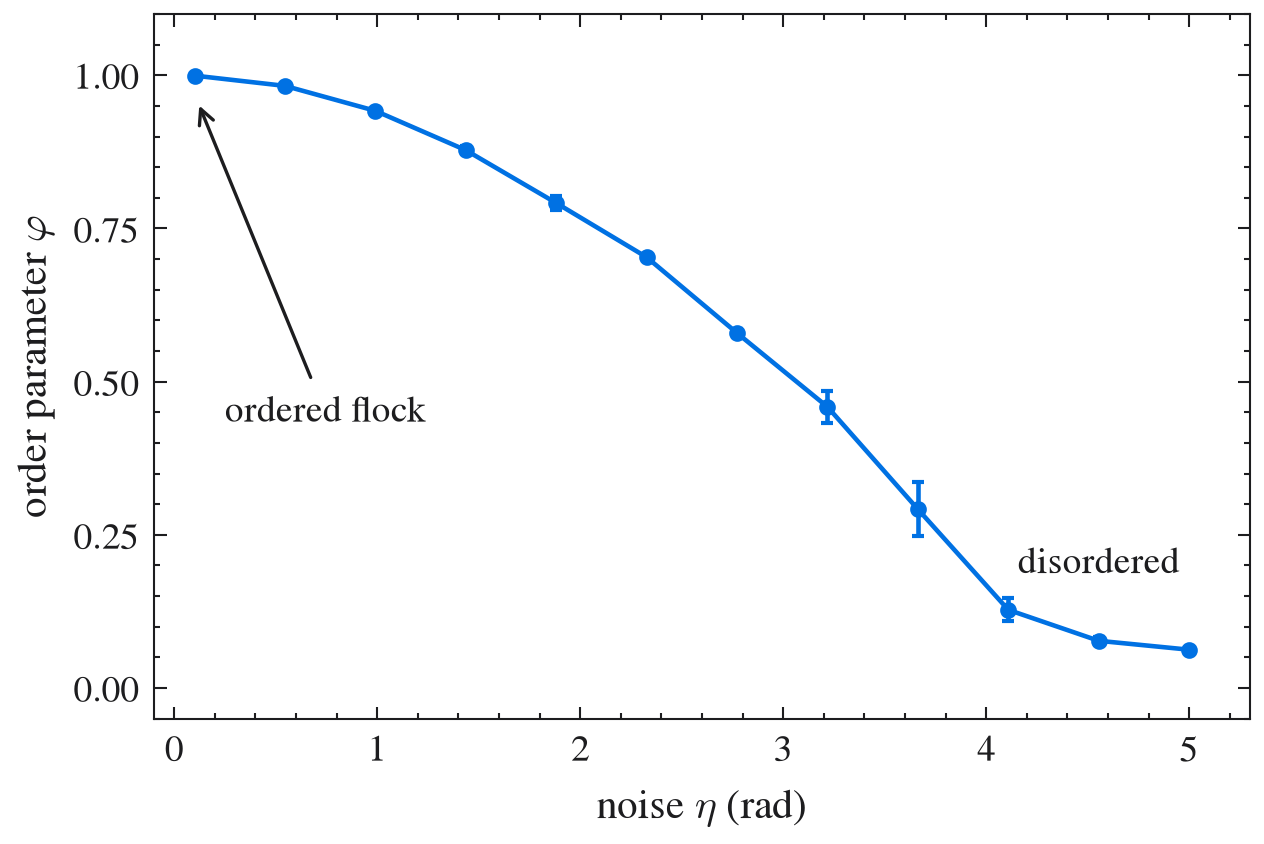
AI agents now plan, use tools and work in teams. Complex-systems science asks how collective behaviour emerges from local rules. Both fields meet at the same question: when does a collection of parts become an agent with goals of its own, and how do we design for that?
Michael Levin and the Platonic space
Michael Levin's work on diverse intelligence shows cells and tissues solving problems in anatomical space, coordinated by bioelectric signals. His 2025 preprint Ingressing Minds goes further. He hypothesises that bodies and minds act as pointers into a structured space of patterns, a "Platonic space", which evolution and engineers both draw on, and perhaps AI too. If that is right, building better agents is partly a search for better interfaces to that space.
What I'm doing
I build research pipelines with AI coding agents, as in MegoBin. [Your questions or experiments on agents and collective intelligence.]
References
- M. Levin. Ingressing minds: causal patterns beyond genetics and environment in natural, synthetic, and hybrid embodiments. Preprint, 2025.
- T. Vicsek et al. Novel type of phase transition in a system of self-driven particles. Physical Review Letters 75, 1226, 1995.